





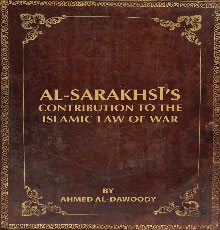
- Ahmed Al-Dawoody
- Journal of Islamic and Near Eastern Law
- 2015
- 17
- 17659
- 7710
- English
- 7481
This paper examines the contributions of the Ḥanafī jurist al-Sarakhsī (d. 483 AH/1090-91 CE) to the development of the Islamic conceptions of (1) jus ad bellum (the principles concerning the permissibility of the decision to wage war) and (2) jus in bello (the rules regulating warfare) in both international and domestic armed conflicts. By examining al-Sarakhsī’s treatment of the use of force by both state and non-state actors in his monumental work al-Mabsūṭ, this paper answers important questions concerning Islamic justifications for waging war and Islamic rules regulating warfare. First, it asks whether Islam sanctions offensive war against non-Muslims because of their religious beliefs. Second, it investigates the extent to which Islamic jus in bello
rules are consistent with the four Geneva Conventions of 1949 and their Additional Protocols? Third, examines the circumstances under which it is permissible for Muslims to rebel against their ruler? Fourth, it explores the meaning of terrorism according to Islamic law and whether or not terrorism is punishable under Islamic law.
This paper compares al-Sarakhsī’s interpretations with those of other prominent Ḥanafī, Mālikī, Shāfi‛ī and Ḥanbalī jurists regarding the Islamic law of war. Al-Sarakhsī’s answers to the questions posed above may provide some insight into the potential impact the law of war of one of the world’s most influential legal systems may have on the peace of our globalized world. This paper argues that certain rules developed by al-Sarakhsī regulating the wartime conduct of Muslim armies ought to be reevaluated by Muslim jurists today in light of present armed conflict in both international and domestic contexts.
The paper was first published on Journal of Islamic and Near Eastern Law, 14 (1), 2015.



 Afar
Afar Afrikaans
 Akan
Akan Albanian
 Amharic
 Armenian
 Assamese
 Avari
Avari Azerbaijani
 Basaa
Basaa Bengali
 Bosnian
 Brahui
 Bulgarian
 Burmese
 Catalan
 Chami
Chami Chechen
 Chichewa
 Circassian
 Comorian
 Czech
Czech Danish
 Dutch
Dutch Estonian
 Finnish
 Fulani
 Georgian
 Greek
Greek Gujarati
 Hausa
Hausa Hebrew
 Hungarian
 Icelandic
 Indonesian
 Ingush
 Japanese
 Jawla
Jawla Kannada
 Kashmiri
 Katlaniyah
 Kazakh
 Khmer
Khmer Kinyarwanda
 Korean
 Kurdish
 Kyrgyz
 Latvian
 Luganda
 Macedonian
 Malagasy
 Malay
Malay Maldivian
 Maranao
 Mongolian
 N'ko
N'ko Nepali
 Norwegian
 Oromo
Oromo Pashto
 Persian
 Polish
 Portuguese
 Romani - gypsy
 Romanian
 Russian
 Serbian
 Sindhi
 Sinhalese
 Slovak
 Slovenian
 Somali
 Swahili
 Swedish
 Tagalog
 Tajik
Tajik Tamazight
 Tashamiya
 Tatar
Tatar Thai
Thai Tigrinya
 Turkish
 Turkmen
 Ukrainian
 Urdu
Urdu Uyghur
 Uzbek
Uzbek Vietnamese
 Yoruba
 Zulu
Zulu