





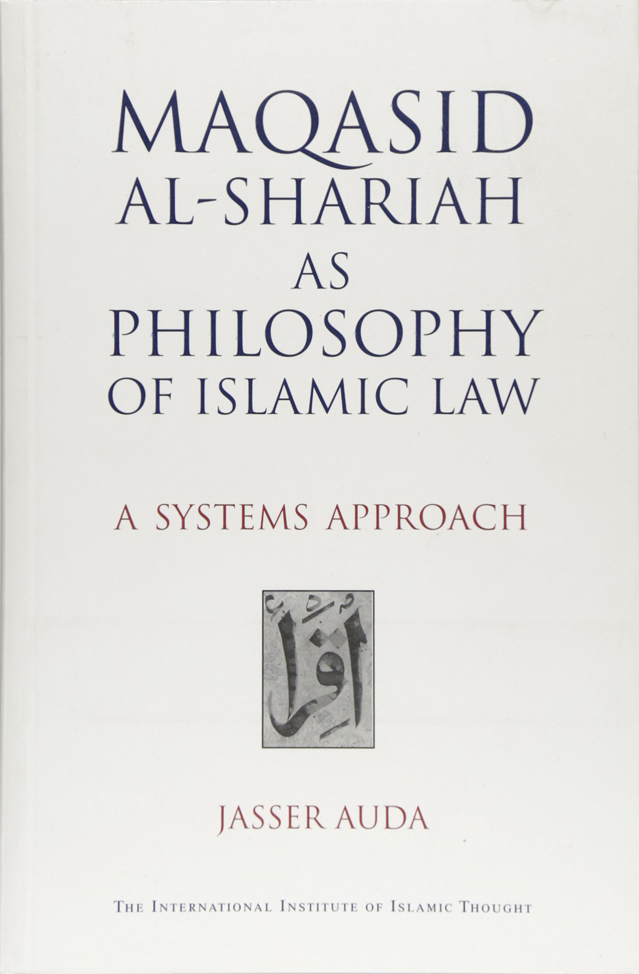
- Jasser Auda
- The International Institute of Islamic Thought
- 2007
- 376
- 25003
- 10550
- Contemporary Issues
- 7667
Maqasid al-Shariah as Philosophy of Islamic Law
A Systems Approach
In this pathbreaking study, Jasser Auda presents a systems approach to the philosophy and juridical theory of Islamic law based on its purposes, intents, and higher objectives (common good, and tolerance in today’s context, Auda presents the very philosophy of Islamic law. He also introduces a novel method for analysis and critique, one that utilizes relevant features from systems theory, such as, wholeness, multidimensionality, openness, and especially, purposefulness of systems.
This book will benefit all those interested in the relationship between Islam and a wide variety of subjects, such as philosophy of law, morality, human rights, interfaith commonality, civil society, integration, development, feminism, modernism, postmodernism, systems theory, and culture.
Current applications (or rather, misapplications) of Islamic law are reductionist rather than holistic, literal rather than moral, one-dimensional rather than multidimensional, binary rather than multi-valued, deconstructionist rather than reconstructionist, and causal rather than teleological.
There is lack of consideration and functionality of the overall purposes and underlying principles of the Islamic law as a whole. Further, exaggerated claims of rational certainty (or else, irrationality ) and consensus of the infallible (or else, historicity of the scripts ) add to lack of spirituality, intolerance, violent ideologies, suppressed freedoms, and authoritarianism.
democratic society. However, throughout my travels in various countries, I see little evidence for these values, on the ground, in Muslim
societies and communities everywhere. So, the big question that I have is: Where is the ‘Islamic law’? How could it play a role in this crisis?
This book attempts to provide an answer to the second question, which, I believe, will eventually bring about an answer for the first question. In other words, when the ‘Islamic law’ proves to have the capacity of making a real change in average-Muslims’ lives, they will embrace it and it will eventually make a difference.
Source: noor-book








 Afar
Afar Afrikaans
 Akan
Akan Albanian
 Amharic
 Armenian
 Assamese
 Avari
Avari Azerbaijani
 Basaa
Basaa Bengali
 Bosnian
 Brahui
 Bulgarian
 Burmese
 Catalan
 Chami
Chami Chechen
 Chichewa
 Circassian
 Comorian
 Czech
Czech Danish
 Dutch
Dutch Estonian
 Finnish
 Fulani
 Georgian
 Greek
Greek Gujarati
 Hausa
Hausa Hebrew
 Hungarian
 Icelandic
 Indonesian
 Ingush
 Japanese
 Jawla
Jawla Kannada
 Kashmiri
 Katlaniyah
 Kazakh
 Khmer
Khmer Kinyarwanda
 Korean
 Kurdish
 Kyrgyz
 Latvian
 Luganda
 Macedonian
 Malagasy
 Malay
Malay Maldivian
 Maranao
 Mongolian
 N'ko
N'ko Nepali
 Norwegian
 Oromo
Oromo Pashto
 Persian
 Polish
 Portuguese
 Romani - gypsy
 Romanian
 Russian
 Serbian
 Sindhi
 Sinhalese
 Slovak
 Slovenian
 Somali
 Swahili
 Swedish
 Tagalog
 Tajik
Tajik Tamazight
 Tashamiya
 Tatar
Tatar Thai
Thai Tigrinya
 Turkish
 Turkmen
 Ukrainian
 Urdu
Urdu Uyghur
 Uzbek
Uzbek Vietnamese
 Yoruba
 Zulu
Zulu