




- Haya Muhammad Eid
- Emily Richardson
- http://www.ahlan-group.com/
- 108
- 15400
- 8356
- Acts of Worship
- 6047
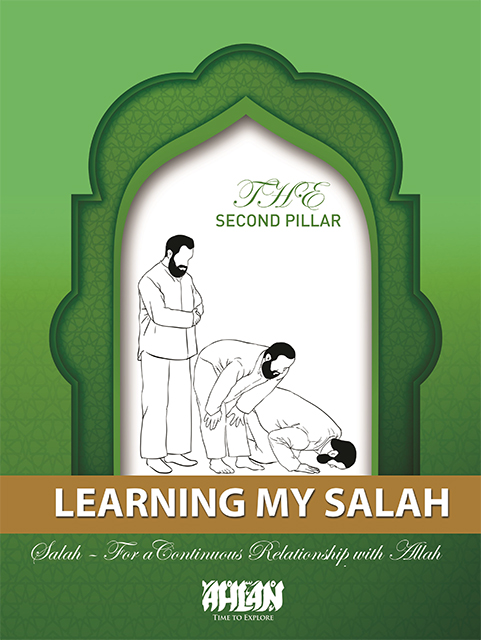
Learning My Salah – The Second Pillar of Islam
“Establish regular prayers. Indeed, performing prayers is a duty on the believers at the appointed times.”
(QUR’AN 4:103)
The stronger the foundation, the stronger and safer the building will be. Any structural damage or defect can cause the whole building to collapse one day.
Salah is the cornerstone of Islam and its second pillar. A person’s Islam is incomplete unless they perform Salah.
Salah derives from the Arabic word Silah, which means connection, because it connects the humans with their Maker and draws them closer to His Mercy. Salah, therefore, is your private contact and communication with the Originator of life and the Creator of everything—Allah. He, the Exalted, has enjoined it upon you to bring you closer to Him daily.
Salah in Islam is the foundation; when performed regularly, it positively influences and transforms every thought, attitude, and action.
Allah says in His Noble Book: “…and establish Salah. Indeed, Salah prohibits immorality and wrongdoing, and the remembrance of Allah is greater.” (Qur’an 29:45) In other words, maintaining regular communication with Allah provides you with guidance and success, fills you with strength and peace, and protects you from deviation and ruin.
Salah Maintains a Continuous Connection with ALLAH
Source: explore-islam




 Afar
Afar Afrikaans
 Akan
Akan Albanian
 Amharic
 Armenian
 Assamese
 Avari
Avari Azerbaijani
 Basaa
Basaa Bengali
 Bosnian
 Brahui
 Bulgarian
 Burmese
 Catalan
 Chami
Chami Chechen
 Chichewa
 Circassian
 Comorian
 Czech
Czech Danish
 Dutch
Dutch Estonian
 Finnish
 Fulani
 Georgian
 Greek
Greek Gujarati
 Hausa
Hausa Hebrew
 Hungarian
 Icelandic
 Indonesian
 Ingush
 Japanese
 Jawla
Jawla Kannada
 Kashmiri
 Katlaniyah
 Kazakh
 Khmer
Khmer Kinyarwanda
 Korean
 Kurdish
 Kyrgyz
 Latvian
 Luganda
 Macedonian
 Malagasy
 Malay
Malay Maldivian
 Maranao
 Mongolian
 N'ko
N'ko Nepali
 Norwegian
 Oromo
Oromo Pashto
 Persian
 Polish
 Portuguese
 Romani - gypsy
 Romanian
 Russian
 Serbian
 Sindhi
 Sinhalese
 Slovak
 Slovenian
 Somali
 Swahili
 Swedish
 Tagalog
 Tajik
Tajik Tamazight
 Tashamiya
 Tatar
Tatar Thai
Thai Tigrinya
 Turkish
 Turkmen
 Ukrainian
 Urdu
Urdu Uyghur
 Uzbek
Uzbek Vietnamese
 Yoruba
 Zulu
Zulu