




- E-Da`wah Committee (EDC)
- E-Da`wah Committee (EDC)
- 2017
- 8
- 20756
- 8558
- Christian Beliefs
- 5664
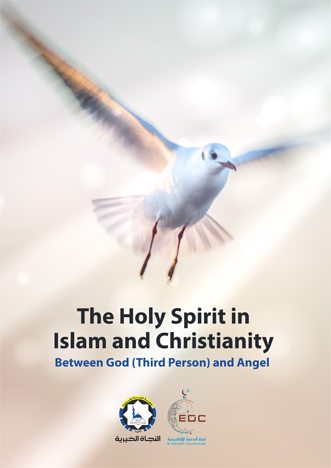
The Holy Spirit in Islam and Christianity
Between God (Third Person) and Angel
It is the Holy Spirit. It is such a being who perplexed the followers of the Abrahamic religions for there is no consensus over the Holy Spirit’s status: if he is God or an angel or what?
Each Abrahamic religion has its own conception of this unusual being.
It is impossible to reconcile those conceptions given the considerable disparity among them.
Let’s consider the nature of this being in the light of the Qur’an on the one hand and the Bible including the Old Testament and the New Testament on the other hand.
The Holy Spirit in Islam
In Islam, the Holy Spirit is Gabriel, who is an angel of God. He is sometimes mentioned by the name “Gabriel”, whereas he is sometimes referred to, inter alia, as “Holy Spirit”.
He is exclusively named “Holy Spirit” to the exclusion of the other angels given his central role in the revelation of the Holy Scriptures and his support of the prophets of God and godly people.
Scholars sought to account for “Spirit” as an exclusive name of Gabriel unlike the other angels. Al-Jayyani remarked: “he was called ‘Spirit’ for selves are livened by him just as they are livened by spirits.”
Ar-Razi followed by Ibn `Adil noted: “he was called ‘Spirit’ for he was created from God’s Spirit.” It is said that he is given this name “for he represents salvation for all creation in terms of judgment. So he is like a spirit which gives life.” It is also said “for he is wholly a spirit unlike the human beings who have both bodies and spirits.” He is called “trustworthy” for he was entrusted with the revelations conveyed to prophets and others.
The evidence for Gabriel being “the Holy Spirit” is the frequent reference to him that it is he who brought down the Qur’an to Prophet Muhammad and that it is he who supports him along with the other prophets. Such are some of the qualities of the Holy Spirit as set out in the Qur’an.





 Afar
Afar Afrikaans
 Akan
Akan Albanian
 Amharic
 Armenian
 Assamese
 Avari
Avari Azerbaijani
 Basaa
Basaa Bengali
 Bosnian
 Brahui
 Bulgarian
 Burmese
 Catalan
 Chami
Chami Chechen
 Chichewa
 Circassian
 Comorian
 Czech
Czech Danish
 Dutch
Dutch Estonian
 Finnish
 Fulani
 Georgian
 Greek
Greek Gujarati
 Hausa
Hausa Hebrew
 Hungarian
 Icelandic
 Indonesian
 Ingush
 Japanese
 Jawla
Jawla Kannada
 Kashmiri
 Katlaniyah
 Kazakh
 Khmer
Khmer Kinyarwanda
 Korean
 Kurdish
 Kyrgyz
 Latvian
 Luganda
 Macedonian
 Malagasy
 Malay
Malay Maldivian
 Maranao
 Mongolian
 N'ko
N'ko Nepali
 Norwegian
 Oromo
Oromo Pashto
 Persian
 Polish
 Portuguese
 Romani - gypsy
 Romanian
 Russian
 Serbian
 Sindhi
 Sinhalese
 Slovak
 Slovenian
 Somali
 Swahili
 Swedish
 Tagalog
 Tajik
Tajik Tamazight
 Tashamiya
 Tatar
Tatar Thai
Thai Tigrinya
 Turkish
 Turkmen
 Ukrainian
 Urdu
Urdu Uyghur
 Uzbek
Uzbek Vietnamese
 Yoruba
 Zulu
Zulu