





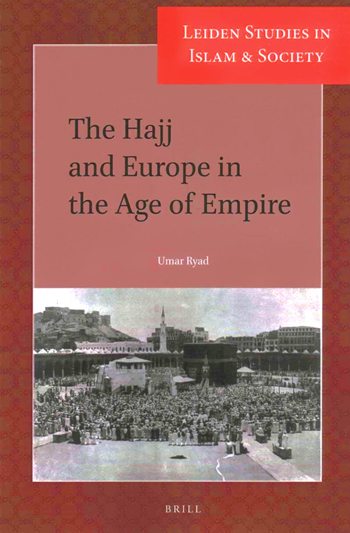
- Umar Ryad
- http://www.brill.com
- 2016
- 286
- 16209
- 9876
- English
- 6532
The Hajj and Europe in the Pre-Colonial and Colonial Age
The Hajj, or the Muslim Pilgrimage to the Holy Places in Mecca and Medina, is not merely a religious undertaking of devotion for Muslims; it is a global annual event that included political, social, economic, and intellectual aspects throughout world history.
The study of Hajj history in the pre-modern and modern eras unravel important mundane human ties and networks of mobility that go beyond its primary religious meanings for millions of Muslim believers around the globe.
In other words, throughout history the Hajj traffic routes and itineraries regularly created new religious, political, social, and cultural contact zones between Muslim regions on the one hand, and with the geographical boundaries of other parts of the world on the other. Since medieval Islamic history, the Hajj had accelerated sea trade as thousands of pilgrims and merchant-pilgrims made their way to Mecca and Medina by sea, stopping at coastal towns where they often traded goods. European connections to the Hajj have a lengthy history of centuries before the influx of Muslim migration to the West after World War ii.
During the colonial age in particular, European and Ottoman empires brought the Hajj under surveillance primarily for political reasons, for economic interests in the control of steamships and for the fear of the growth of pan-Islamic networks. Another important motive for the European scrutiny of Hajj was their anxiety for the spread of epidemic diseases in their colonies after the pilgrims’ return.
The present volume focuses on the political perceptions of the Hajj, its global religious appeal to Muslims, and the European struggle for influence and supremacy in the Muslim world in the age of pre-colonial and colonial empires.
By the term “empire,” we follow in this volume Jonathan Hart’s particular reference to “those western European nations who, beginning with Portugal, began in the fourteenth and fifteenth centuries to expand offshore and later overseas.






 Afar
Afar Afrikaans
 Akan
Akan Albanian
 Amharic
 Armenian
 Assamese
 Avari
Avari Azerbaijani
 Basaa
Basaa Bengali
 Bosnian
 Brahui
 Bulgarian
 Burmese
 Catalan
 Chami
Chami Chechen
 Chichewa
 Circassian
 Comorian
 Czech
Czech Danish
 Dutch
Dutch Estonian
 Finnish
 Fulani
 Georgian
 Greek
Greek Gujarati
 Hausa
Hausa Hebrew
 Hungarian
 Icelandic
 Indonesian
 Ingush
 Japanese
 Jawla
Jawla Kannada
 Kashmiri
 Katlaniyah
 Kazakh
 Khmer
Khmer Kinyarwanda
 Korean
 Kurdish
 Kyrgyz
 Latvian
 Luganda
 Macedonian
 Malagasy
 Malay
Malay Maldivian
 Maranao
 Mongolian
 N'ko
N'ko Nepali
 Norwegian
 Oromo
Oromo Pashto
 Persian
 Polish
 Portuguese
 Romani - gypsy
 Romanian
 Russian
 Serbian
 Sindhi
 Sinhalese
 Slovak
 Slovenian
 Somali
 Swahili
 Swedish
 Tagalog
 Tajik
Tajik Tamazight
 Tashamiya
 Tatar
Tatar Thai
Thai Tigrinya
 Turkish
 Turkmen
 Ukrainian
 Urdu
Urdu Uyghur
 Uzbek
Uzbek Vietnamese
 Yoruba
 Zulu
Zulu